How to estimate roof age from satellite imagery
A roof age field on a homeowner application is one of the least reliable numbers in the file. It's often the year the house was built rather than the year it was last re-roofed, or a guess the policyholder made because the agent needed something to type in. On a renewal book of any real size, you can't send a ladder crew to check every one of those numbers before the next cycle closes.
What you can check, without a truck roll, is what the roof looks like right now. That's a different question than "how old is it," but it's the one that actually drives loss propensity, and it's the one you can answer off imagery.
Shingle wear indicators from above
Asphalt shingles don't age quietly. They show it, and most of what they show is visible straight down, not just from the curb.
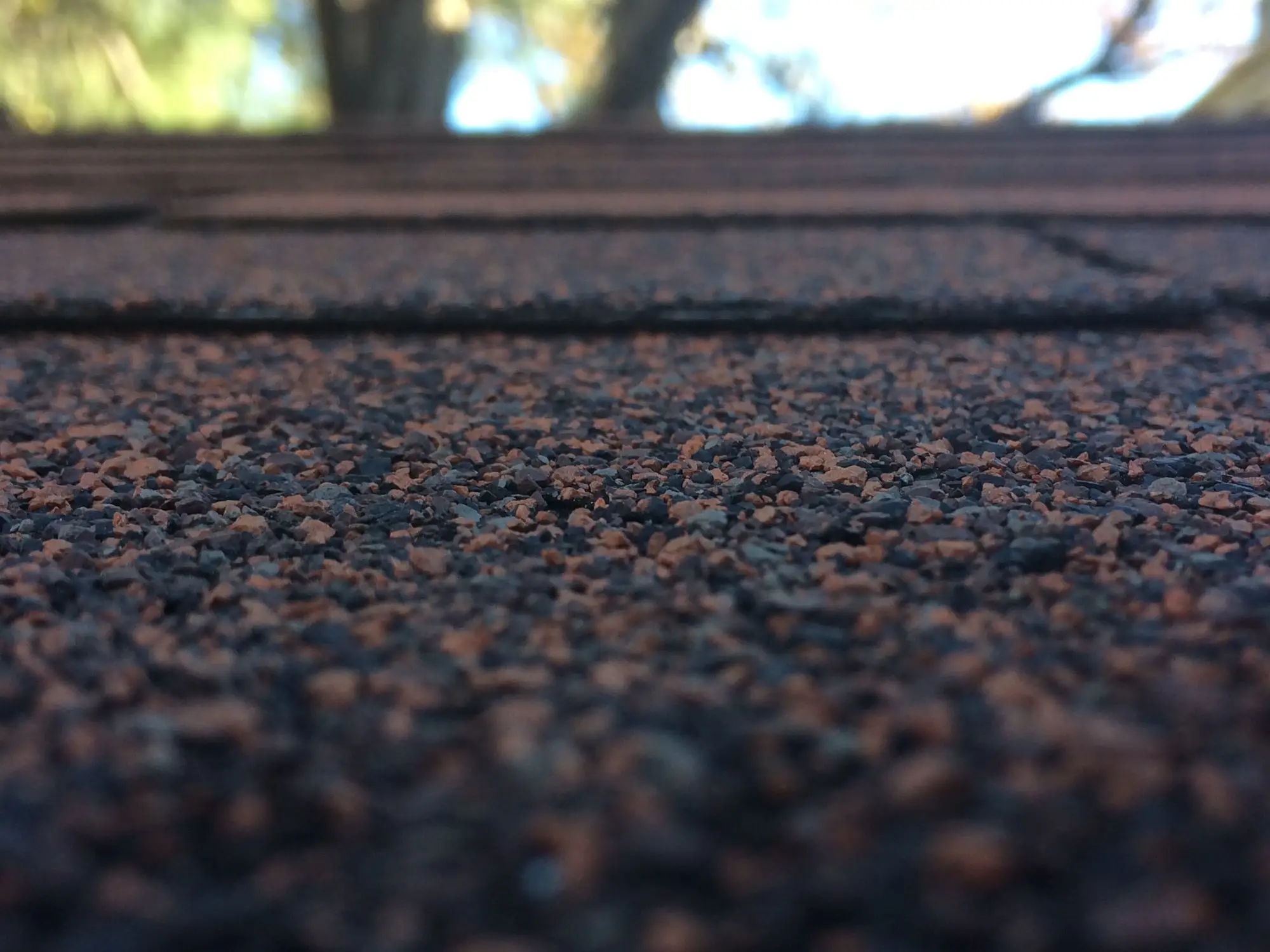
- Granule loss. As the mineral coating wears off, the underlying asphalt darkens and the color goes patchy and uneven across the slope. Heavy, widespread granule loss is one of the clearer tells that a roof is late in its service life.
- Staining. Algae streaking (the dark vertical runs you'd describe as "zebra striping" on site) tends to spread with age and with shade exposure. Rust staining near flashing or vent stacks points to failing metal, not just an old roof.
- Patching. Mismatched shingle color on part of a slope, or a visibly different shingle profile in one section, usually means a repair rather than a full replacement. That matters for underwriting because a patched 22-year-old roof and a uniform 22-year-old roof carry different risk even at the same nominal age.
- Tarps. A blue or silver tarp is the bluntest signal there is. It says there's an active leak or storm damage that hasn't been addressed yet, regardless of what the file says about age.
None of these signals spells out how many years the roof has been in service. They tell you the condition state the roof is in, which for underwriting purposes is usually more useful than the age itself.
Reading condition at the resolution underwriting needs
Granule loss and staining are texture-level detail. You need imagery sharp enough to resolve them, which means very high resolution capture, around 0.3 meter ground sample distance or finer, not the resolution you'd get from a standard aerial basemap or a wide-area satellite pass. At that resolution a tarp is obvious, patching is identifiable, and staining patterns separate from shadow and roof color variation instead of blurring into it.
Cadence matters almost as much as resolution. A single snapshot tells you the condition on the day it was captured. An annual pass lets you compare this year's image against last year's for the same address and catch what changed: a new tarp, a patch that wasn't there before, staining that's spread across another third of the slope. For a renewal book, that year-over-year comparison is often more actionable than the raw condition read on its own.
Roof age underwriting guidelines versus condition triage
Most carrier guidelines still bucket roofs by age range, something like 0 to 5 years, 6 to 10, 11 to 15, 16 to 20, and 20-plus, because age ranges are easy to write into a rate table and tie to expected remaining life. Imagery doesn't hand you an age bracket directly. What it hands you is a condition profile that correlates with wear state, and wear state is what the age bracket was always a proxy for in the first place.
This gives you a way to triage the book before anyone picks up a phone: flag the addresses with heavy granule loss, extensive staining, visible patching, or an active tarp for a closer look, whether that's an inspection order, a non-renewal review, or a letter asking the policyholder to address visible damage, and let the rest move through renewal without tying up an adjuster's calendar. The condition read is what tells you which addresses are worth questioning the age field on.
That's the gap Roof Scoring is built to close: a per-address condition record, refreshed once a year off VHR imagery, that you can sort against your own guidelines instead of working the whole book blind.
If your renewal book needs a condition pass before the next cycle closes, see what that record looks like for your own addresses.