What causes dark streaking on asphalt shingle roofs
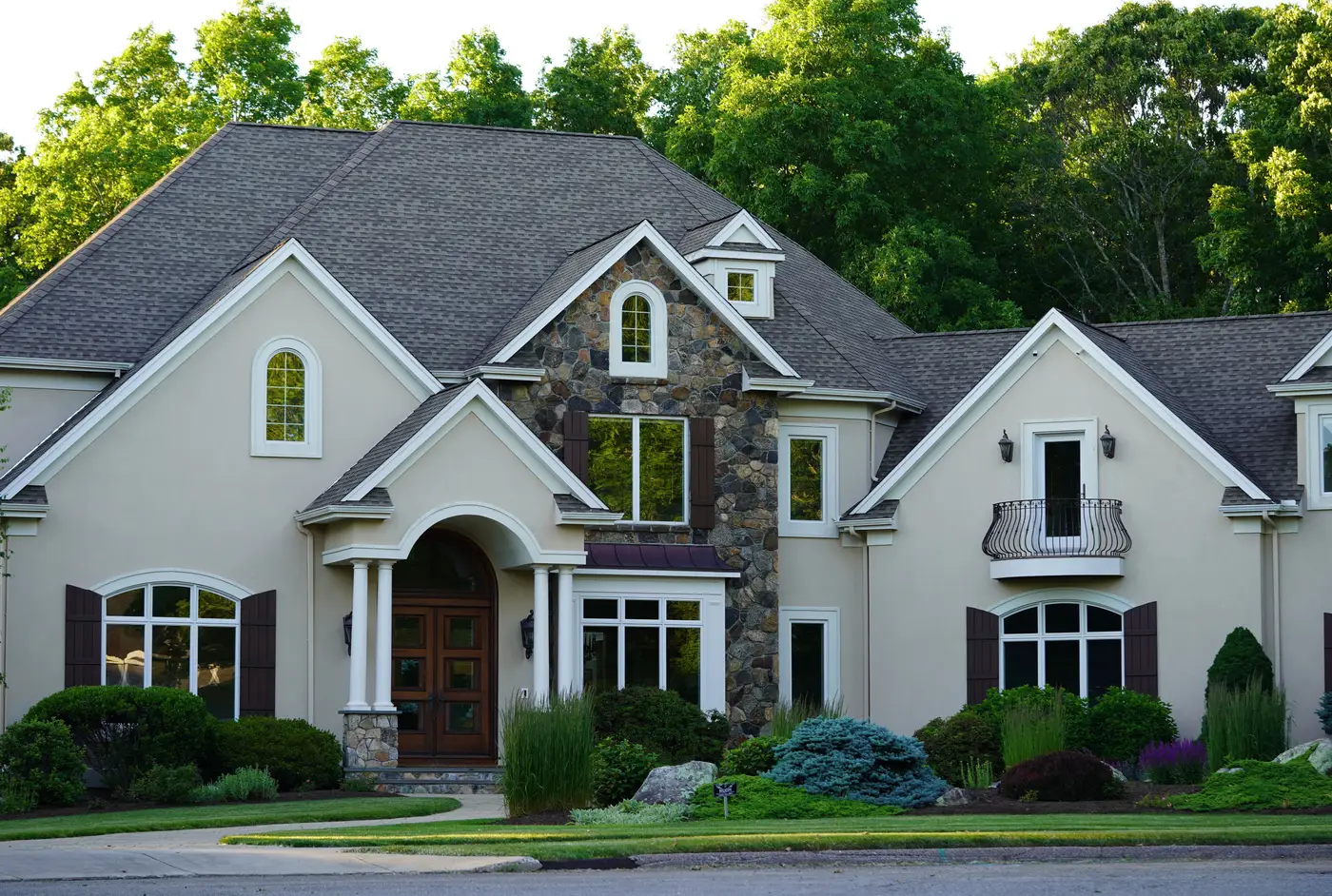
Every renewal season, someone on the team flags a roof with dark streaks running down from the ridge and asks whether it's hail damage, a failing roof, or something else. Nine times out of ten, it's algae. Knowing which one you're looking at matters, because treating cosmetic staining as a condition flag wastes a reinspection, and treating real deterioration as cosmetic staining lets a bad roof ride through to the next term.
What the streaking is
The dark streaks most homeowners and adjusters call "dirt" or "mold" are almost always a colony of blue-green algae, Gloeocapsa magma, growing on the shingle surface. It feeds on the limestone filler in asphalt shingles and secretes a dark, UV-resistant pigment as a byproduct. That pigment is what you're seeing: a biological stain, not a structural defect.
It shows up first on the north-facing slope, or whichever slope gets the least direct sun and holds moisture longest, which is why streaking is so common in the Southeast and Gulf states and rarer on steep, sun-baked roofs in the Southwest. It spreads from the ridge downward because spores wash down with rain. Given a few humid summers, it can cover most of a slope.
None of that touches the shingle's ability to shed water. Algae staining is a cosmetic condition that changes how a roof looks, not how it performs. A streaked roof and a clean roof installed the same year, from the same batch, carry the same remaining service life.
Algae staining vs storm damage
The confusion usually starts because both conditions can make a roof look "off" in an aerial or drive-by view, and both get reported after a wind or hail event when a homeowner finally looks up and notices the roof for the first time. But the patterns read differently once you know what to look for.
Algae staining runs in streaks or patches that follow the slope and the shade line, and the shingle surface underneath is intact. Storm damage shows up as a different kind of pattern: bruising or divots from hail, shingles that are lifted, cracked, or missing in a cluster tied to wind direction, and exposed felt or decking where tabs have blown off. Hail bruising usually shows up as a lighter, granule-stripped spot where the mat shows through. If an adjuster or an imagery review turns up dark streaking with no accompanying granule loss, torn tabs, or exposed mat, that's a cosmetic finding, not a storm claim.
Black streaks vs granule loss
This is the distinction that belongs in a renewal file. Algae streaking is a surface stain sitting on top of intact granules. Granule loss is the granules themselves wearing or shearing off the shingle, exposing the black asphalt mat underneath, and it's the thing that shortens a roof's remaining life by letting UV and water get at the mat directly.
The two can look similar from a distance, especially in RGB imagery where both read dark against a lighter shingle field, but they come from different causes and carry different underwriting weight. Granule loss comes from age, hail impact, foot traffic, or a bad batch of shingles, and it progresses. Algae staining comes from humidity and shade, and it stays cosmetic unless it's masking something else, like moisture retention around a patch or flashing that's starting to fail underneath.
Neither condition announces itself in a claims file or an application. A roof can carry visible algae staining for a decade and never generate a loss. A roof with real granule loss can look fine in a thumbnail photo until someone pulls a flag. For a book with thousands of addresses, there's no way to send an adjuster to every roof just to tell streak from damage, and that's the gap a per-address roof condition read from VHR imagery is built to close: staining, granule loss, patching, and tarps scored separately, once a year, so a renewal decision isn't made on a guess from a street-view thumbnail.
If dark streaking keeps showing up as an unresolved flag across your book, it might be time to see what a systematic read on every roof looks like.