What is a non-renewal threshold, and how do carriers set one for roof condition?
A non-renewal threshold is the line in your underwriting guidelines that says: past this point, we don't offer another term on this risk. For roof condition specifically, it's usually a combination of age, material, and visible damage that pushes a policy from "renew as-is" to "renew with conditions" to "non-renew." Most carriers don't publish the exact number, because it isn't one number. It's a set of rules that interact.
If you write homeowners business, you already know the shape of the problem. A renewal book of any size has roofs you've never seen in person, installed under a prior carrier's underwriting, on homes that haven't filed a claim in a decade. The roof could be fine. It could also be three years from a tarp. Without a site visit, most books default to age alone as the proxy, which is where a lot of the trouble starts.
Why age alone is a weak threshold
Roof age guidelines exist because age correlates with wear, and correlation is easy to administer. A guideline that says "flag anything over 20 years" is simple to write into a rating engine and simple for an underwriter to apply at renewal. The problem is that a 22-year-old architectural shingle roof in a mild climate can outperform a 12-year-old roof that took two hailstorms and a bad patch job. Age tells you statistical risk across a population. It doesn't tell you the condition of the roof in front of you.
Carriers that rely on age cutoffs alone tend to do one of two things, and neither is great. They non-renew sound roofs that happen to be old, which costs retention and triggers DOI complaints in states that scrutinize non-renewal patterns. Or they renew deteriorated roofs that happen to be young, which shows up later as a large loss with a coverage dispute attached. Either way, age-only thresholds are a blunt instrument standing in for the thing underwriting wants to measure: condition.
What a condition cutoff should include
A roof condition cutoff for underwriting purposes generally looks at a handful of visible indicators, the same ones an adjuster would note on an inspection report:
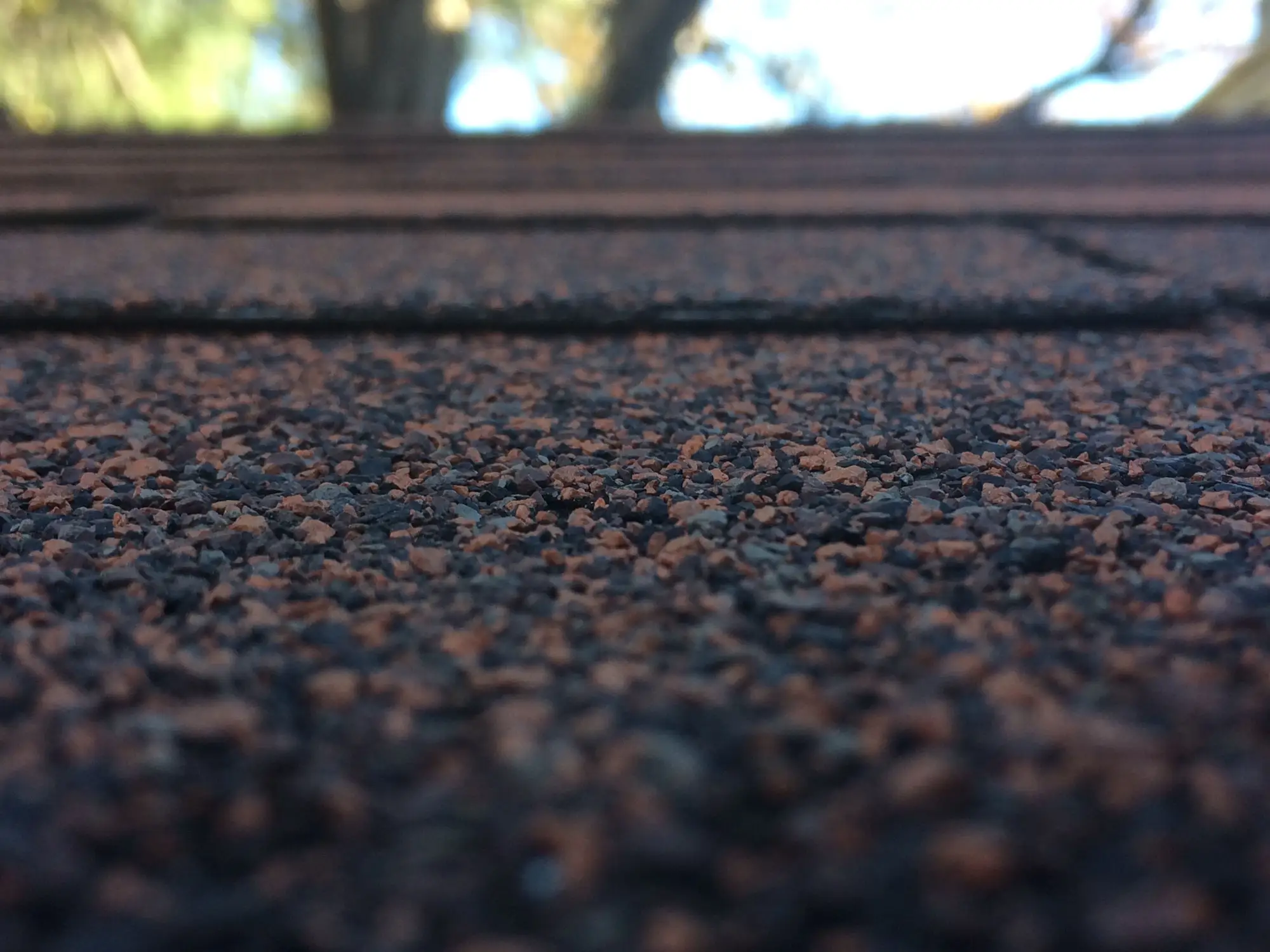
- Granule loss: bare patches on shingles that signal the surface is past its protective life, independent of the install date.
- Staining and discoloration: streaking that suggests moisture retention, algae, or a membrane breaking down underneath.
- Patching: visible repair work, mismatched material, or tarps, all of which indicate the homeowner or a contractor already knows there's a problem.
- Material and roof shape: context for how the other three should be weighted. A flat membrane roof wears differently than a steep pitched shingle roof, and a condition cutoff that doesn't account for that will misclassify one or the other.
Non-renewal rules that combine these with age produce a much more defensible decision than age alone. You can say, credibly, that a 25-year-old roof with no staining, no patching, and minimal granule loss renewed on its merits, and a 9-year-old roof with a tarp and heavy staining didn't. That's a decision you can show a regulator or an agent without it reading as arbitrary.
The practical obstacle is cost. Getting an adjuster or inspector to every address in a renewal book, every year, to check for these four things isn't something most books budget for outside of claims. That's the gap between the underwriting guideline you'd like to apply and the guideline you can apply at scale, and it's why so many books fall back to age as a stand-in for condition they can't otherwise see.
Closing the gap without a site visit
This is the specific gap Roof Scoring is built around: reading staining, granule loss, patching, and tarps off very high resolution aerial and satellite imagery once a year, and turning that into a per-address record you can sort against your own non-renewal thresholds. No site visit, no adjuster dispatch, just a condition read you can apply the same way across every roof in the book.
If your renewal guidelines currently stop at roof age, see what a per-address condition read adds to the picture.